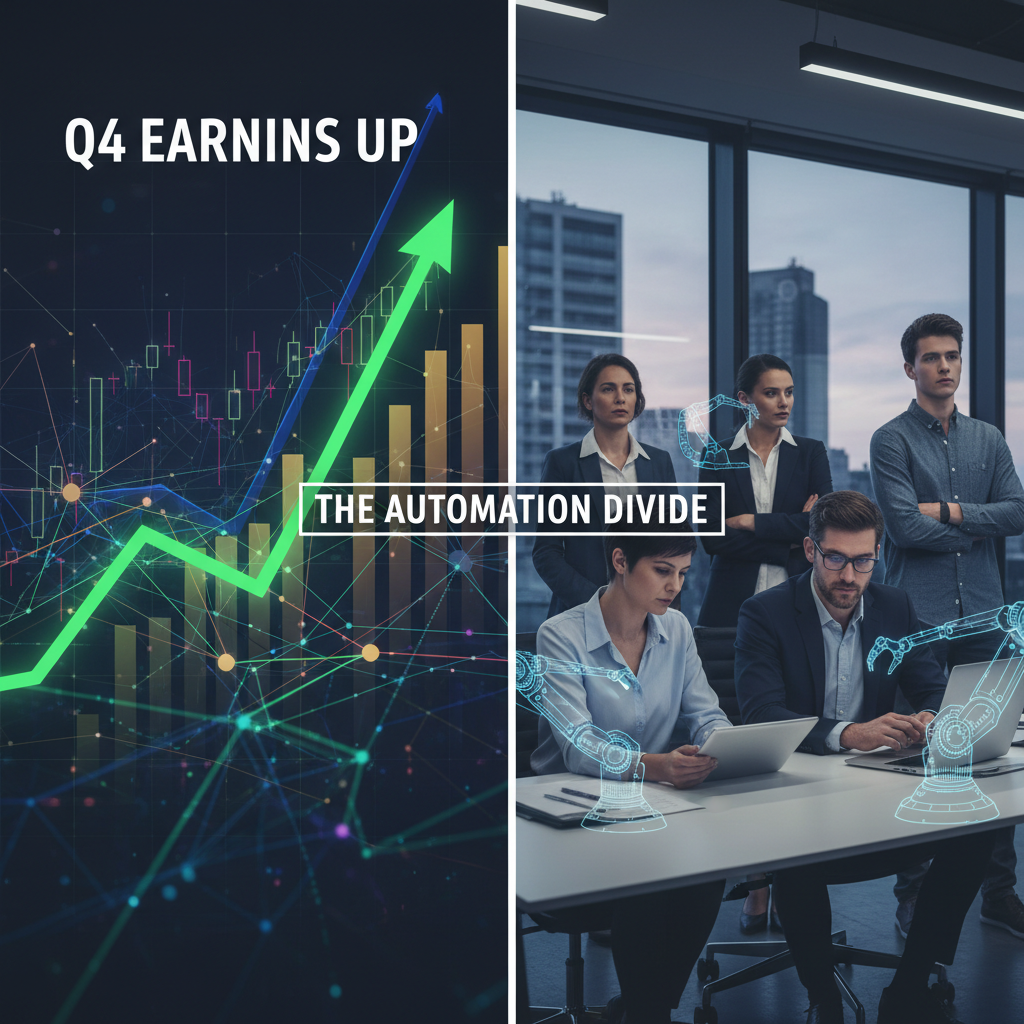
AI Drives Corporate Profits, Sparks Workforce Reskilling Urgency
Global Economic Landscape, Q2 2026 – The second quarter of 2026 has drawn to a close, and the financial reports from leading corporations across various sectors paint a clear picture: artificial intelligence is no longer a futuristic concept but a tangible, profit-driving force. Companies are reporting unprecedented gains in efficiency, substantial cost reductions, and enhanced decision-making capabilities, all largely attributed to the widespread adoption and sophisticated deployment of AI technologies. This surge in AI productivity, while celebrated by shareholders, simultaneously casts a long shadow over the global workforce, intensifying the debate around job displacement and the critical need for comprehensive reskilling initiatives.
The AI Dividend: Efficiency and Cost Savings Soar
From advanced manufacturing to intricate financial services, AI's imprint on corporate operations is undeniable. Major tech giants, alongside established industrial conglomerates, have leveraged AI to automate routine tasks, optimize supply chains, predict market trends with greater accuracy, and personalize customer experiences at scale. For instance, a recent report from McKinsey & Company highlighted that AI could add trillions to the global economy, primarily through productivity enhancements. This quarter's earnings calls have echoed this sentiment, with numerous CEOs detailing how AI-powered analytics have streamlined operations, reducing overheads by double-digit percentages and accelerating product development cycles. The competitive edge gained by early and effective AI adopters is becoming increasingly pronounced, setting a new benchmark for operational excellence.
The Looming Shadow: Job Displacement Concerns
While corporate balance sheets flourish, the human element of this transformation remains a significant concern. The very efficiencies celebrated by executives often translate into reduced demand for human labor in specific roles. Entry-level data entry, customer service, and even some analytical positions are increasingly being augmented or entirely replaced by intelligent automation. Labor organizations and policy makers are grappling with the implications of this accelerating shift. The World Economic Forum, in its Future of Jobs Report, has consistently pointed to the dual nature of AI's impact: creating new jobs while displacing others. This quarter's corporate successes only amplify the urgency for proactive strategies to manage this transition responsibly.
The Reskilling Imperative: A Global Call to Action
In response to the growing concerns, the call for widespread reskilling and upskilling initiatives has reached a fever pitch. Governments, educational institutions, and corporations are being urged to collaborate on programs that equip workers with the skills necessary for the AI-driven economy. This includes not only technical proficiencies in areas like data science and AI development but also critical 'soft skills' such as critical thinking, creativity, emotional intelligence, and complex problem-solving – attributes less susceptible to automation. Companies like IBM (visit their official website at www.ibm.com for more on their AI and workforce initiatives) have already invested heavily in internal reskilling programs, recognizing that a prepared workforce is essential for sustained growth in the AI era. However, the scale of the challenge requires a much broader, systemic approach.
Navigating the Future: A Balanced Approach
As we look beyond Q2 2026, the trajectory of AI adoption shows no signs of slowing. The economic benefits are clear, but so are the societal challenges. The path forward demands a balanced approach that harnesses AI's transformative power for economic prosperity while simultaneously safeguarding and empowering the human workforce. This means not just reacting to job displacement but proactively investing in lifelong learning, fostering adaptable workforces, and designing policies that support workers through inevitable transitions. The coming quarters will undoubtedly test the resolve of leaders across all sectors to ensure that the AI revolution benefits all, not just the bottom line.
For more information, visit the official website.