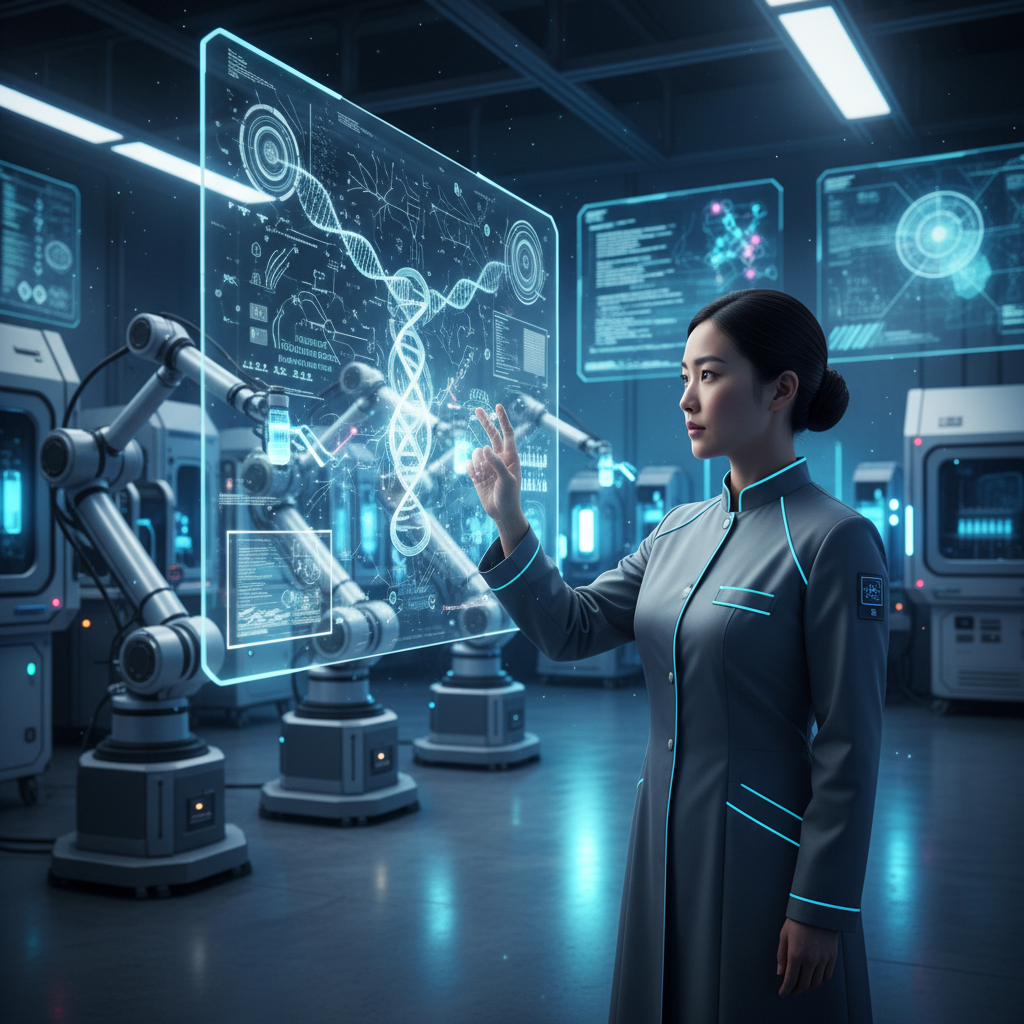
The pharmaceutical industry is on the cusp of a profound transformation, driven by the relentless advancement of artificial intelligence. What once took decades and billions of dollars is now being compressed into a fraction of the time, thanks to sophisticated AI algorithms capable of sifting through vast datasets, identifying potential drug candidates, and predicting their efficacy and safety with remarkable accuracy. This paradigm shift is particularly impactful for areas historically underserved by traditional drug development, such as rare diseases and complex cancers.
Accelerating the Search for Cures
AI's role in drug discovery begins long before clinical trials. Machine learning models analyze molecular structures, protein interactions, and disease pathways to pinpoint promising compounds. "The ability of AI to rapidly screen billions of potential molecules and simulate their interactions with biological targets is nothing short of revolutionary," states Dr. Elena Petrova, lead researcher at BioGen AI, a pioneering firm in the field. "It allows us to bypass countless dead ends and focus our resources on the most viable candidates." This computational power is drastically reducing the pre-clinical phase, bringing potential treatments to human trials much faster than ever before. For instance, a recent AI-driven project identified a novel compound for a specific type of muscular dystrophy in under 18 months, a process that typically spans several years.
Personalized Medicine: A New Era of Treatment
Beyond discovery, AI is also a cornerstone of the emerging field of personalized medicine. By integrating genomic sequencing data, patient histories, and real-world evidence, AI algorithms can predict how an individual will respond to a particular treatment. This allows for highly tailored therapeutic strategies, moving away from the 'one-size-fits-all' approach. In oncology, AI is proving invaluable in selecting the most effective chemotherapy regimens or targeted therapies based on a tumor's unique genetic signature. For rare diseases, where patient populations are small and genetic variations are critical, AI-powered personalized medicine offers the best chance for effective intervention, often identifying existing drugs that can be repurposed for new indications.
Early Human Trials Show Promise
The impact of these advancements is now being seen in early human trials. As of May 2026, several AI-derived drug candidates are progressing through Phase 1 and Phase 2 trials with encouraging results. One notable example is 'TheraGen-001,' an AI-designed immunotherapeutic for a rare autoimmune disorder, which has shown significant reduction in disease markers in initial patient cohorts. Similarly, 'OncoPredict-X,' an AI-optimized small molecule inhibitor for a particularly aggressive form of glioblastoma, has demonstrated improved progression-free survival rates in its early trials, exceeding expectations set by traditional drug development benchmarks. These early successes underscore the precision and speed that AI brings to the drug development pipeline.
The Future of Healthcare is Intelligent
The integration of AI in drug discovery and personalized medicine is not merely an incremental improvement; it represents a fundamental shift in how we approach healthcare. While challenges remain, including regulatory hurdles and the need for robust validation, the trajectory is clear. The collaborative efforts between AI specialists, biologists, chemists, and clinicians are forging a path toward a future where debilitating diseases are not just managed, but potentially cured, and treatments are as unique as the patients they serve. This intelligence-driven era promises to deliver a new generation of therapeutics with unprecedented speed and efficacy, ultimately transforming patient outcomes globally. For more details on the latest breakthroughs in AI and healthcare, you can visit the National Institutes of Health website (https://www.nih.gov/).
For more information, visit the official website.