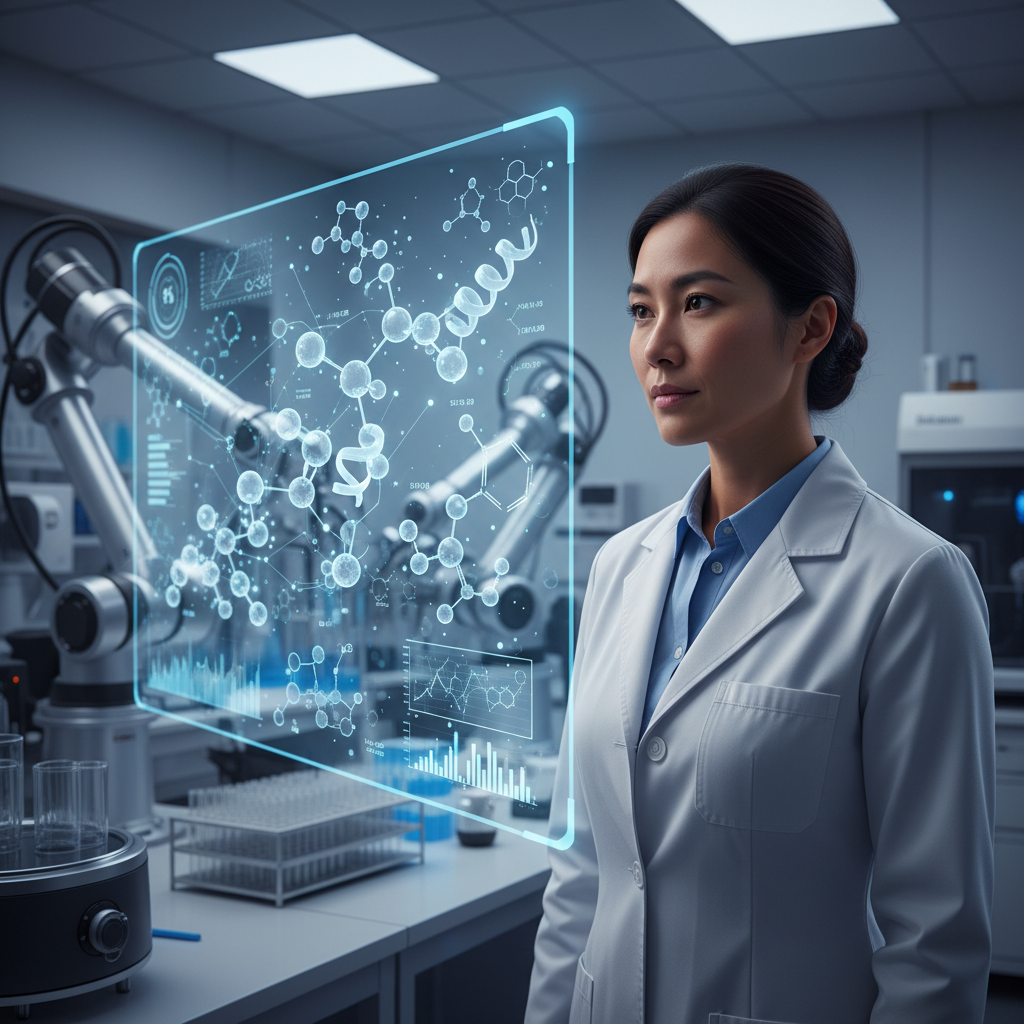
AI-Driven Drug Discovery: A New Frontier in Medicine
London, UK – The landscape of pharmaceutical research is undergoing a profound transformation, with artificial intelligence (AI) emerging as a pivotal force in accelerating the discovery and development of novel therapeutics. This quarter, a significant milestone has been reached as several AI-designed compounds, targeting complex diseases like neurodegenerative disorders and certain cancers, have advanced into early human trials. This development underscores AI's growing capacity to revolutionize how new medicines are brought from concept to clinic.
For decades, drug discovery has been a notoriously lengthy, expensive, and often unpredictable process. Traditional methods involve extensive laboratory work, screening millions of compounds, and navigating high failure rates. AI, however, is changing this paradigm by leveraging advanced algorithms to analyze vast datasets, predict molecular interactions, and even design entirely new chemical entities with desired properties. This computational prowess allows researchers to identify promising candidates far more efficiently, drastically cutting down the time and resources typically required.
Accelerating Breakthroughs for Challenging Conditions
The impact of AI is particularly pronounced in areas where traditional drug development has struggled. Neurodegenerative diseases, such as Alzheimer's and Parkinson's, and various aggressive cancers, have long presented formidable challenges due to their complex biological mechanisms and the difficulty in finding effective, targeted treatments. AI platforms can sift through genetic data, protein structures, and disease pathways with unprecedented speed, pinpointing potential drug targets and designing molecules that interact precisely with them. This precision is crucial for developing therapies that are not only effective but also minimize off-target side effects.
One notable example comes from a collaboration between a leading biotech firm and an AI drug discovery company, whose AI platform identified a novel compound for a specific type of glioblastoma, an aggressive brain cancer. This compound, designed to inhibit a previously hard-to-target protein, showed remarkable efficacy in preclinical models and has now entered Phase 1 clinical trials. Similarly, another AI-generated candidate for an early-stage neurodegenerative condition is also progressing through human trials, offering a glimmer of hope for patients with limited treatment options.
The Promise of Personalized Medicine
Beyond accelerating discovery, AI is also a cornerstone of the burgeoning field of personalized medicine. By analyzing individual patient data – including genomic information, medical history, and lifestyle factors – AI algorithms can predict how a patient might respond to a particular drug or even design treatments tailored to their unique biological profile. This move away from a 'one-size-fits-all' approach promises more effective therapies with fewer adverse reactions, ultimately leading to better patient outcomes. The integration of AI into clinical decision-making is still in its nascent stages, but its potential to transform healthcare delivery is immense.
Experts believe that the current wave of AI-driven compounds entering human trials is just the beginning. As AI models become more sophisticated and access to high-quality biological data expands, the pace of innovation is expected to accelerate further. While challenges remain, including regulatory hurdles and the need for robust validation, the current breakthroughs signal a new era where AI is not just assisting, but actively leading, the charge in the quest for life-saving medicines. For more in-depth information on the latest advancements, the National Institutes of Health (NIH) often publishes research and updates on these topics. Visit the NIH website for further details on medical research and clinical trials.
Future Outlook: A Collaborative Ecosystem
The future of drug discovery will likely involve a symbiotic relationship between human ingenuity and artificial intelligence. Scientists and clinicians will increasingly leverage AI as a powerful tool, freeing up valuable time to focus on complex experimental validation and clinical translation. This collaborative ecosystem is poised to deliver a steady stream of innovative therapies, addressing unmet medical needs and improving global health outcomes. The journey from AI-designed molecule to approved drug is long, but the initial steps into human trials represent a monumental leap forward for medical science.
For more information, visit the official website.