The AI Tsunami: A Post-Q1 2026 Reckoning
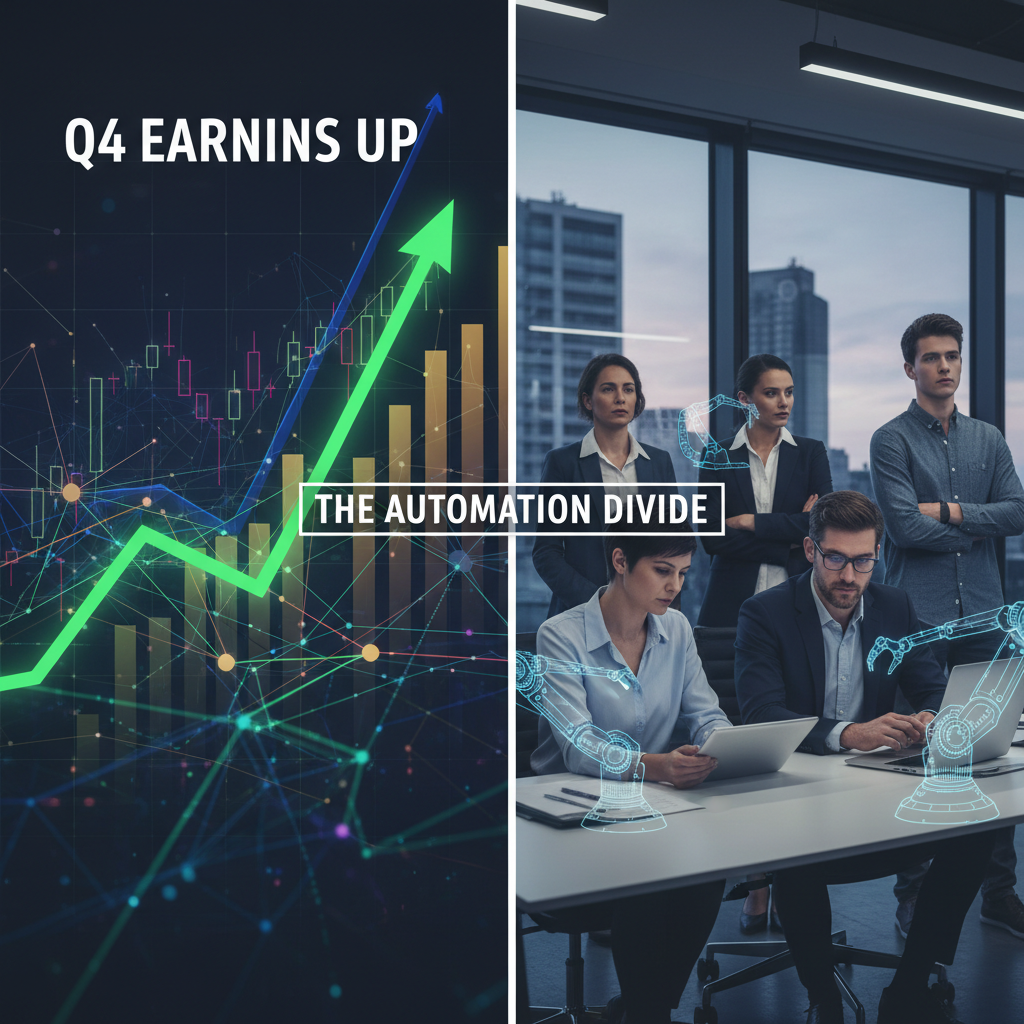
The first quarter of 2026 has concluded, and with it, a wave of earnings reports that have sent clear signals across the global economy: Artificial Intelligence is no longer a futuristic concept but a present-day imperative. Companies across sectors, buoyed by strong financial performances and the promise of enhanced efficiency, are aggressively integrating AI technologies, from advanced automation in manufacturing to sophisticated algorithms in customer service and data analysis. This rapid adoption, while driving productivity gains, is simultaneously triggering an unprecedented period of workforce transformation, marked by both significant job displacement and the emergence of entirely new roles.
Job Displacement and the Automation Frontier
The immediate impact of this accelerated AI integration is most keenly felt in areas susceptible to automation. Routine, repetitive tasks, whether manual or cognitive, are increasingly being taken over by intelligent systems. Sectors such as administrative support, data entry, manufacturing assembly, and even certain aspects of financial analysis are witnessing substantial shifts. Reports from leading consultancies, like the World Economic Forum's latest Future of Jobs report (available at weforum.org), indicate that while millions of jobs may be displaced, an even greater number could be created, albeit in different areas and requiring different skill sets. This creates a critical mismatch, leaving many workers in vulnerable positions without immediate pathways to new employment.
The Rise of New Roles and Reskilling Imperatives
Conversely, the AI revolution is not solely about job loss. It is also a powerful engine for job creation, albeit in nascent and often highly specialized fields. Demand for AI trainers, prompt engineers, AI ethicists, data scientists, machine learning engineers, and robotics technicians is skyrocketing. These roles require advanced technical skills, critical thinking, and often a deep understanding of human-computer interaction. Recognizing this, corporations are increasingly investing in massive reskilling and upskilling initiatives. Companies like TechCorp Global, for instance, have launched internal academies designed to retrain existing employees for AI-adjacent roles, aiming to transition a significant portion of their workforce rather than simply replacing them. This proactive approach is seen as crucial for retaining institutional knowledge and fostering employee loyalty during turbulent times.
Corporate Restructuring and Strategic Adaptations
Beyond individual job roles, AI is fundamentally reshaping corporate structures. Traditional hierarchical models are giving way to more agile, project-based teams, often augmented by AI tools that streamline workflows and decision-making. Departments are being reorganized, with a greater emphasis on cross-functional collaboration and data-driven insights. This corporate restructuring is not merely about efficiency; it's about building resilient, adaptable organizations capable of navigating a rapidly evolving technological landscape. Boards are increasingly scrutinizing AI strategies, not just for their financial returns, but for their long-term implications on human capital and societal impact.
Government Responses and the Call for AI Regulation
Governments worldwide are grappling with the multifaceted challenges posed by AI's impact on labor. Policy discussions range from universal basic income proposals to enhanced social safety nets and significant investments in public education and vocational training programs. There's a growing consensus that AI regulation is essential, not just to govern the technology's ethical deployment, but also to mitigate its disruptive effects on employment. Initiatives like the European Union's AI Act aim to establish a framework for trustworthy AI, while other nations are exploring incentives for companies that invest in workforce development and ethical AI practices. The goal is to foster innovation while ensuring a just transition for workers and preventing widening socio-economic disparities.
Navigating the Future of Work
The post-Q1 2026 landscape underscores a pivotal moment in the history of work. The integration of AI is accelerating at an unprecedented pace, demanding swift and strategic responses from all stakeholders. For individuals, continuous learning and adaptability are paramount. For corporations, responsible AI adoption, coupled with robust reskilling programs, will define their long-term success and social license to operate. And for governments, proactive policy-making and international cooperation will be key to harnessing AI's potential for societal benefit while minimizing its disruptive consequences. The future of work is not a distant horizon; it is being shaped right now, with every AI deployment and every strategic decision made in boardrooms and legislative chambers around the globe.