Global AI Governance Summit Convenes Amidst Urgent Calls for Regulation
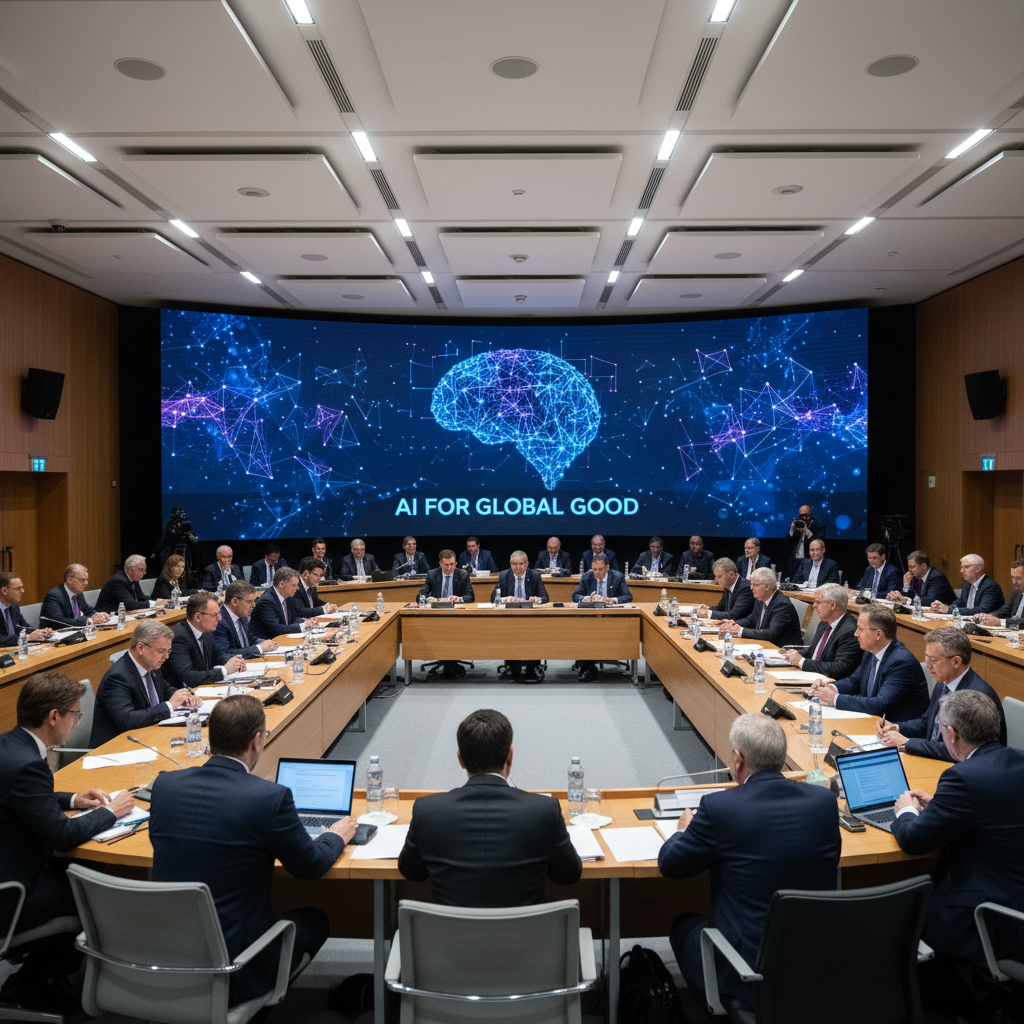
GENEVA, SWITZERLAND – The inaugural Global AI Governance Summit, held this week in Geneva, has brought together an unprecedented assembly of world leaders, technology executives, ethicists, and policymakers. The central agenda: how to collectively manage the rapid, transformative, and potentially disruptive development of artificial intelligence. As AI capabilities expand at an exponential rate, the international community is grappling with the profound implications for national security, economic stability, human rights, and the very fabric of society.
The summit's proceedings underscored a growing global consensus on the necessity of AI regulation, yet revealed significant divergences on the how and when. Many delegates emphasized the need for agile, adaptable frameworks that can keep pace with technological innovation without stifling progress. Others, however, voiced deep concerns about the potential for misuse, autonomous weapon systems, and the exacerbation of existing societal biases, advocating for more immediate and stringent controls, including outright moratoriums on the development of certain high-risk AI applications.
The Push for International Cooperation and Ethical Guidelines
Discussions frequently circled back to the principle of international cooperation. Several nations highlighted that AI, by its very nature, transcends borders, making purely national regulatory approaches insufficient. "The challenges posed by advanced AI are global in scope and demand a unified, multilateral response," stated Ambassador Chen Li of China, during a plenary session. "We must work together to establish shared ethical guidelines and robust safety protocols that protect humanity while harnessing AI's immense potential for good." The European Union, a frontrunner in AI regulation with its proposed AI Act, presented its model as a potential blueprint for global standards, emphasizing transparency, accountability, and human oversight.
However, the path to a unified global framework is fraught with complexities. Geopolitical tensions, differing national interests, and varying levels of technological advancement among nations present significant hurdles. Developing countries, for instance, voiced concerns that overly restrictive regulations could widen the technological gap and hinder their ability to leverage AI for development. There was also considerable debate regarding the enforcement mechanisms for any potential international agreements, with questions raised about sovereignty and the capacity of global bodies to monitor and sanction non-compliant actors.
Calls for a Moratorium and the Pace of Innovation
A particularly contentious point at the summit was the growing chorus of calls for a moratorium on the development of advanced AI systems, particularly those exhibiting emergent capabilities or posing existential risks. Proponents of a pause, including a coalition of prominent AI researchers and public intellectuals, argue that humanity is not yet prepared to manage the consequences of unchecked AI advancement. They suggest a temporary halt would allow policymakers to catch up, establish robust safety measures, and develop comprehensive regulatory frameworks before irreversible risks are unleashed. This sentiment echoes concerns raised in open letters and petitions from leading figures in the AI community, as detailed by organizations like the Future of Life Institute.
Conversely, many industry leaders and some national delegations cautioned against a moratorium, arguing it could stifle innovation, cede technological leadership to less scrupulous actors, and ultimately delay the benefits AI could bring to areas like healthcare, climate change, and scientific discovery. They advocate for a more nuanced approach, focusing on responsible development, red-teaming, and continuous risk assessment rather than a blanket ban. The summit concluded with a commitment to further dialogue and the establishment of several working groups tasked with drafting preliminary recommendations for international AI governance, signaling a long road ahead in this critical global endeavor.
Looking Ahead: The Future of AI Governance
The Global AI Governance Summit, while not yielding immediate binding agreements, has undeniably set the stage for ongoing, high-stakes discussions. It has crystallized the urgent need for a shared global vision for AI, one that balances innovation with safety, opportunity with responsibility. The coming years will test the international community's ability to forge consensus on one of the most defining technological challenges of our era, shaping the future trajectory of artificial intelligence and its impact on human civilization.
For more information, visit the official website.