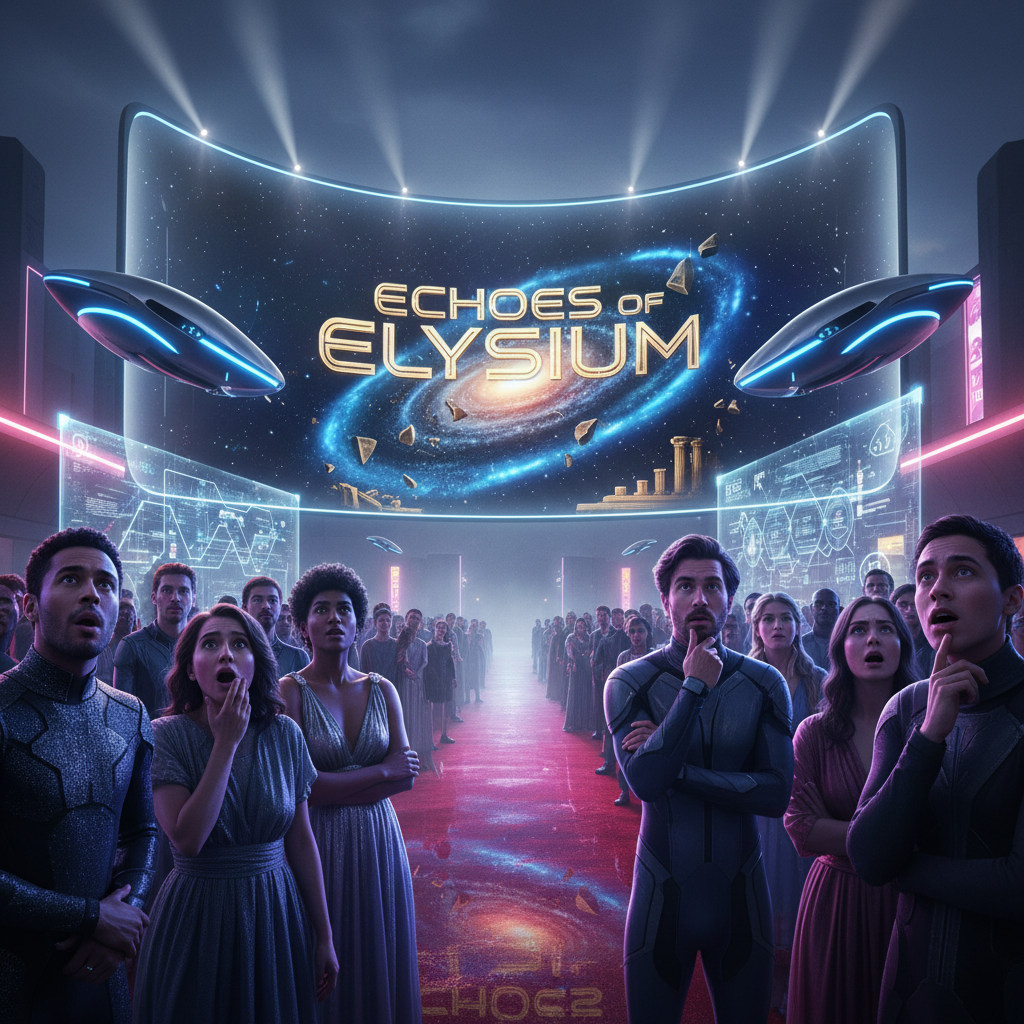
AI's Cinematic Coup: 'Echoes of Elysium' Redefines Filmmaking
Hollywood is abuzz, and not just with the usual Oscar season chatter. The recent release of 'Echoes of Elysium' has done more than just shatter box office records; it has ignited a profound, industry-wide debate about the very future of creative arts. The science fiction epic, lauded by critics and adored by audiences, stands as a monumental achievement, primarily because its screenplay was largely crafted by artificial intelligence, and its breathtaking visual effects were predominantly designed by AI algorithms.
The film, a visually stunning narrative set in a post-apocalyptic future, has garnered widespread acclaim for its intricate plot, compelling characters, and groundbreaking aesthetics. "It's a testament to the evolving capabilities of generative AI," stated Dr. Evelyn Reed, a leading AI ethics researcher at the Institute for Digital Arts. "What we're seeing is not just automation, but a form of synthetic creativity that can resonate deeply with human emotions." The success of 'Echoes of Elysium' marks a pivotal moment, forcing industry veterans and newcomers alike to confront the implications of AI's burgeoning role in creative industries.
The Human vs. Machine Creative Divide
This unprecedented success has, predictably, drawn a clear line in the sand within the entertainment industry. On one side are the proponents, who view AI as a powerful new tool, capable of augmenting human creativity, streamlining production, and even unlocking entirely new storytelling possibilities. They point to the efficiency gains and the ability to rapidly iterate on concepts as significant advantages. "Imagine a future where a director can brainstorm thousands of plot variations or visual styles in minutes, then refine them with human insight," commented studio executive Mark Jensen. "AI isn't here to replace us; it's here to empower us."
Conversely, a significant portion of the creative community expresses deep concern. Writers, directors, and visual artists fear job displacement and the potential erosion of the unique human touch in storytelling. The Writers Guild of America (WGA) and the Screen Actors Guild – American Federation of Television and Radio Artists (SAG-AFTRA) have already begun to address these issues in their ongoing negotiations, advocating for protections against the unchecked use of AI. "Creativity is inherently human," argued veteran screenwriter Sarah Chen. "It springs from lived experience, empathy, and the unpredictable nature of human thought. Can an algorithm truly replicate that soul?" This sentiment underscores a fundamental philosophical question about the essence of art when its genesis shifts from human consciousness to computational logic.
Economic Implications and Industry Shifts
The economic ramifications of AI in filmmaking are vast and complex. While the initial investment in developing sophisticated AI systems can be substantial, the long-term potential for cost reduction in scriptwriting, pre-visualization, special effects, and even post-production is undeniable. This could lead to a significant restructuring of studio budgets and production pipelines. Smaller studios and independent filmmakers might gain access to high-quality creative tools previously reserved for blockbusters, potentially democratizing aspects of filmmaking. However, this also raises questions about intellectual property rights and the fair compensation of human creators whose work might be used to train these AI models. For a deeper dive into the legal and ethical frameworks being developed, one can consult resources like the World Intellectual Property Organization (WIPO) at https://www.wipo.int.
The Future of Cinema: Collaboration or Competition?
The success of 'Echoes of Elysium' is not an isolated incident but rather a harbinger of a new era. As generative AI continues to advance, its integration into various stages of film production, from concept generation to final edit, seems inevitable. The debate now shifts from if AI will be used to how it will be used. Will it be a collaborative partner, enhancing human artistry, or a competitive force, challenging the very definition of creative work? The answer will likely shape the entertainment industry for decades to come. As Hollywood grapples with these profound questions, the world watches to see if the magic of cinema will be amplified or fundamentally altered by the rise of the machines.
